
The most common question we get at the yard is not about price or delivery. It is some version of “how much do I need?” And it makes sense. Order too little and your project stalls while you wait on a second load. Order too much and you have a pile of gravel sitting in your driveway with nowhere to go.
The good news is that estimating landscape material is simple math once you know how coverage works. This guide walks you through it, and if you would rather skip the math entirely, use the calculator below or just call us. We estimate quantities for customers every single day.
The Basic Formula
Almost all bulk landscape material is sold by the cubic yard. One cubic yard is a cube measuring 3 feet on every side, or 27 cubic feet total.
To figure out how many cubic yards you need:
- Measure the length and width of your area in feet
- Multiply them together to get square footage
- Decide how deep you want the material in inches
- Use this formula:
Example: a 20 foot by 15 foot area covered 3 inches deep works out to 20 × 15 × 3 ÷ 324 = about 2.8 cubic yards. Round up to 3 and you are covered.
Coverage Per Cubic Yard
Here is what one cubic yard covers at common depths:
| Depth | Coverage |
|---|---|
| 1" | 324 sq ft |
| 2" | 162 sq ft |
| 3" | 108 sq ft |
| 4" | 81 sq ft |
| 6" | 54 sq ft |
How Deep Should You Go?
Depth depends on the material and the job. These are the depths we recommend for Central Texas yards:
- Decomposed granite: 2 to 3 inches for pathways, compacted in lifts. Go 4 inches for driveways or high traffic areas.
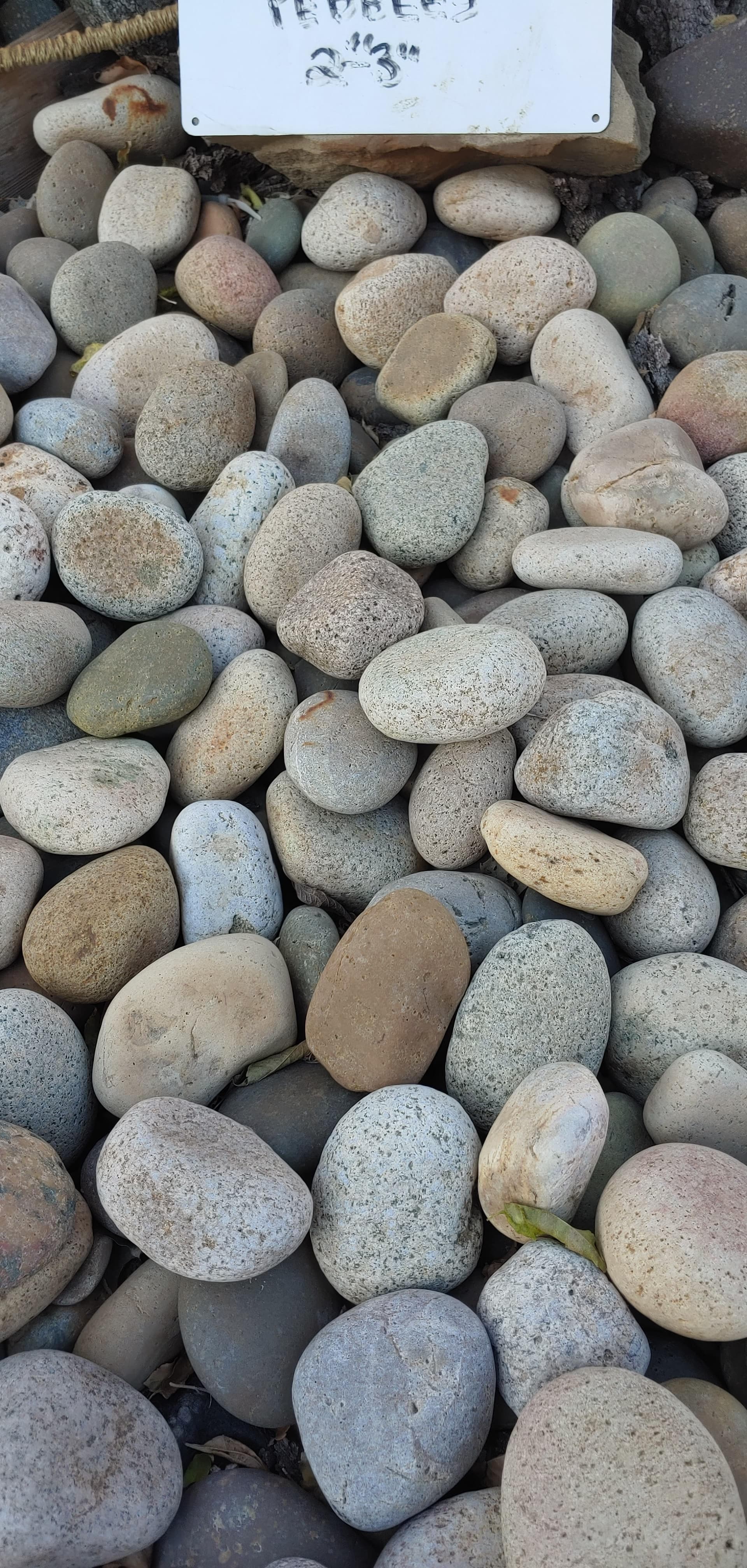
- Gravel and river rock: 2 to 3 inches for ground cover and beds. Smaller gravel like 3/8 inch can go 2 inches. Larger river rock needs 3 inches or more so the ground does not show through.
- Mulch: 2 to 3 inches around trees and beds. More than 4 inches can hold too much moisture against trunks and stems.
- Topsoil and garden soil: 2 to 4 inches when topdressing a lawn or amending beds. 6 inches or more for new raised beds and vegetable gardens.
- Paver base: 4 to 6 inches of compacted base under patios and walkways. Do not skimp here — base depth is what keeps a patio flat for the next twenty years.
Weight Matters Too
A cubic yard of mulch weighs around 800 pounds. A cubic yard of gravel or decomposed granite runs 2,400 to 2,900 pounds, and soil lands in between depending on moisture. This matters for two reasons. First, a half ton pickup realistically hauls about half a yard of rock or one yard of mulch. Second, it is why bulk delivery usually beats hauling it yourself once you need more than a yard or two.
Bulk vs Bagged: The Quick Math
One cubic yard equals roughly 13.5 of the 2 cubic foot bags you find at big box stores. Once your project needs more than about half a yard, bulk material from a local yard is almost always cheaper, and you skip loading, hauling, and disposing of a mountain of plastic bags.
Common Project Estimates
- Gravel path, 4 ft wide × 25 ft long, 3 inches deep: about 1 cubic yard
- Rock ground cover for a 500 sq ft bed, 3 inches deep: about 4.5 cubic yards
- Topdressing a 2,000 sq ft lawn with half an inch of compost: about 3 cubic yards
- Paver patio base, 12 ft × 16 ft, 4 inches deep: about 2.5 cubic yards
A Few Tips Before You Order
- Round up, not down. Settling, compaction, and uneven ground eat into your estimate. Ordering 10 percent extra is cheaper than a second delivery fee.
- Irregular areas: Break odd shaped spaces into rectangles and circles, estimate each, and add them up. For circles, use radius × radius × 3.14 for square footage.
- Slopes and low spots take more material than flat math suggests. If your yard rolls, add a little extra.
- Decomposed granite compacts. Order about 20 percent more than your loose measurement calls for, since compaction shrinks the depth.
Coverage Calculator
Enter the dimensions of your area and desired depth to find out how many cubic yards you need.


